“Custom car mats” is a broad label. It covers everything from a universal mat you trim down at home to a set cut from a digital scan of your exact vehicle, at prices from around fifty dollars to a few hundred. That spread makes it genuinely hard to compare one brand against another, because you are often not comparing the same thing at all.
This guide breaks it down to the handful of things that actually decide whether a set is worth the money. Judge any brand on these and you can compare like with like, whatever the marketing says.
What “custom-fit” actually means
The word “custom” gets used loosely, so it helps to know the three broad approaches behind it.
Universal, trimmed to fit. A generic mat you cut down to your footwell. It is the cheapest route, but trimming by hand leaves gaps, and the edges rarely follow the shape of the floor, which is exactly where water and grit end up.
A pattern per model. A shape drawn for a class of vehicle, closer than universal but still an approximation, and often shared across variants that are not quite identical.
Patterned from the actual vehicle. The mat is cut from a scan of that specific make, model and year, so it follows the whole footwell, including the side wells, and lines up with the vehicle’s original anchor points.
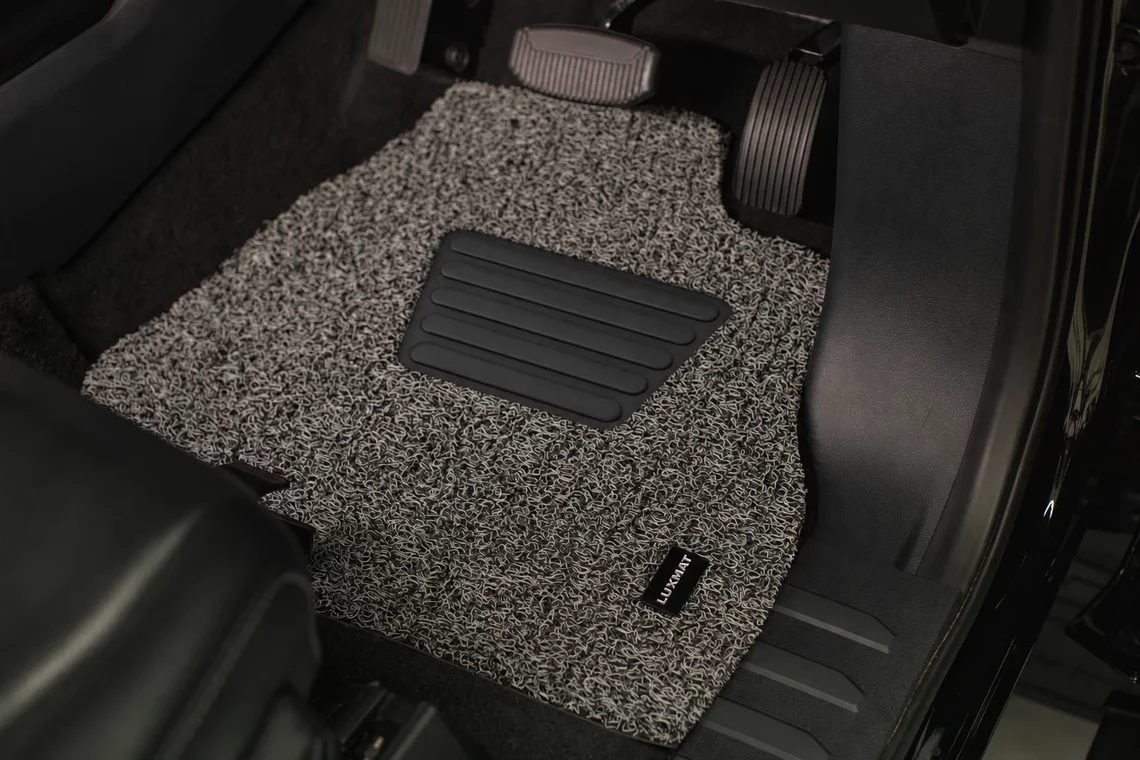
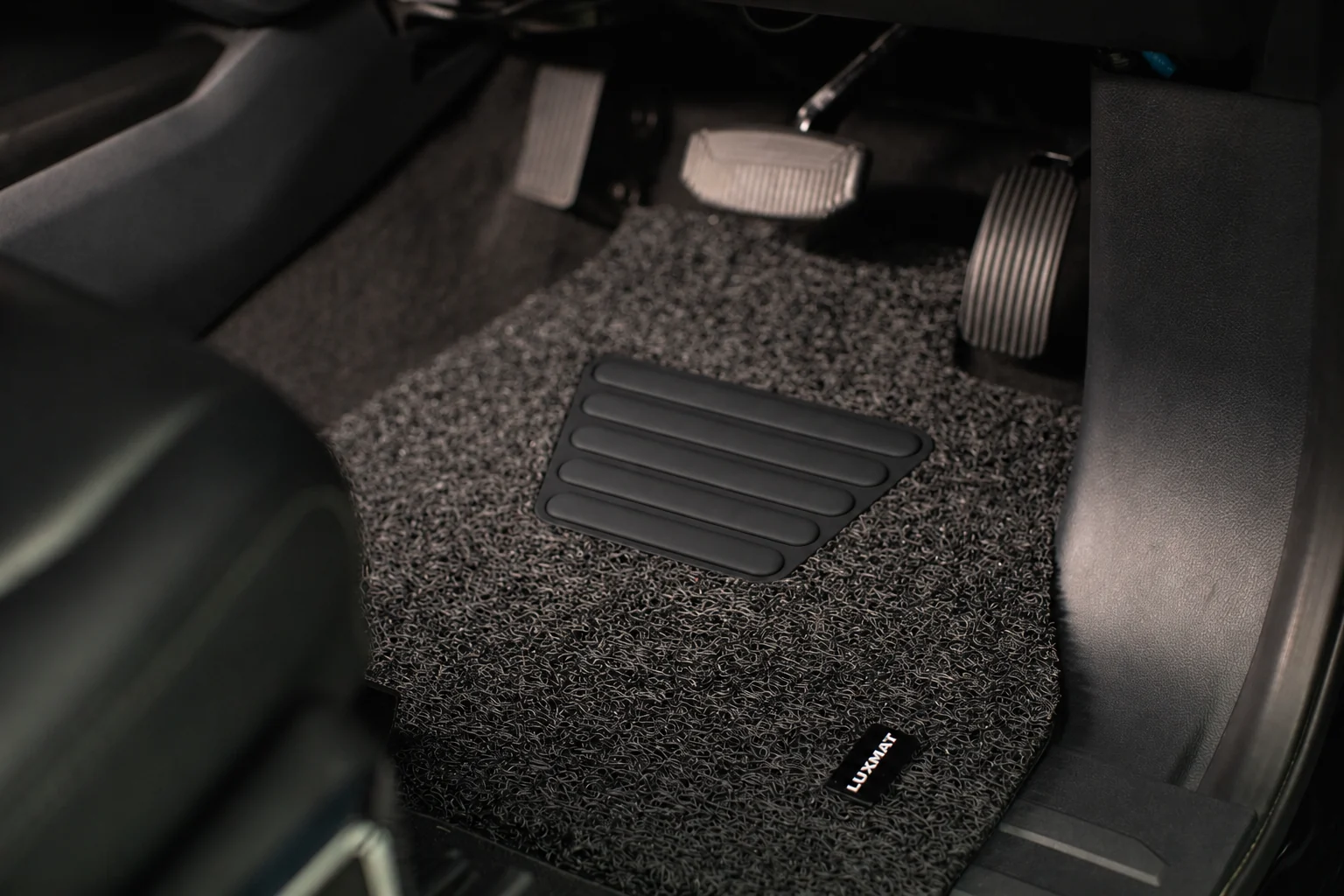
The further along that spectrum a mat sits, the more it lies flush, stays put and covers the corners a rough shape misses. This is the single biggest thing to check, so the first question to ask of any brand is simply: how is the mat patterned? LUXMAT sits at the far end of that spectrum, with each set patterned from a 3D CAD scan of the specific vehicle.
The material it is made from
Fit decides whether a mat covers the floor. Material decides how it behaves once it does.
Carpet looks tidy when new and is quiet underfoot, but it absorbs water and holds sand and dirt down in the pile, so it needs vacuuming and shampooing and never quite comes back to new.
Flat rubber is waterproof and wipes clean, but it has nowhere to put anything, so mess sits on the surface and moves around underfoot.
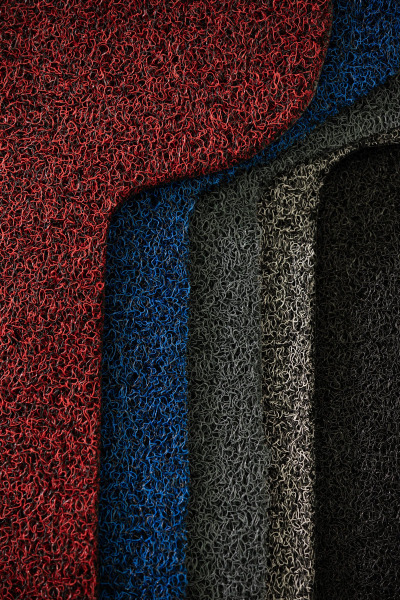
Coil rubber is a dense surface of upright rubber loops over a sealed backing. Dirt, sand and water fall through the loops and sit below where you stand, out of sight, until you lift the mat out and hose it off. It handles Australian heat, dust and short heavy rain better than either of the others, which is why it is the material LUXMAT uses. Our coil rubber vs flat rubber vs carpet comparison covers how the three stack up in detail.
Where it is made, and how it is backed
Two quieter signals tell you a lot about how long a set is built to last.
The first is where it is made. An Australian-made mat is patterned and cut here for local-delivery vehicles, and it is easier to hold to account if something is not right.
The second is the warranty. A warranty is a maker putting a number on how long they expect the mat to hold up, so it is a fair proxy for quality before you even have the mat in your hands. LUXMAT is made in Campbellfield, Victoria, and every set carries a 36-month warranty.
Cost over the life of the mat, not the sticker price
The cheapest set on day one is often not the cheapest set over the years you own the car. A universal mat at fifty to eighty dollars that needs replacing every couple of years can quietly cost more across a decade than a set that lasts the life of the vehicle, and it protects the carpet underneath far less well along the way.
So the number that matters is not the price on the label, it is the cost per year once you factor in how long a set lasts and how well it guards the carpet beneath it. It is worth doing that sum for yourself before deciding what a set is really worth.
A simple checklist to compare any two sets
Line any two brands up on these seven points and the better value for your situation tends to become obvious:
- Fit method: trimmed universal, a per-model pattern, or cut from a scan of the actual vehicle.
- Material: carpet, flat rubber or coil rubber, and how each cleans.
- Coverage: does it reach the side wells and the rear footwells, or stop short.
- Anchoring: does it engage the factory anchor points so it cannot slide toward the pedals.
- Where it is made: local or imported, and how easy support is to reach.
- Warranty: how long, and what it actually covers.
- Price per year: the cost divided by the years you will realistically get out of it.
Where LUXMAT fits
LUXMAT is custom-fit coil rubber, patterned from a 3D CAD scan of your exact make, model and year and made in Campbellfield, Victoria, by a team with more than 35 years of OEM-grade vehicle-fit manufacturing behind it. Each set is finished with a defined edge and an anti-slip backing, covers the full footwell, and lifts straight out to hose clean. Sets start from around $115, every order includes a heel pad, and production to dispatch is typically 7 to 12 business days with $15 flat shipping Australia-wide.

If you want to see the set made for your car, the LUXMAT vehicle finder takes you straight to it, or browse every supported make and model in the vehicles index.
Frequently asked questions
How does LUXMAT compare to other custom car mat brands?
LUXMAT is custom-fit coil rubber, patterned from a 3D CAD scan of your exact make, model and year and made in Campbellfield, Victoria. The looped coil surface traps dirt and water below where you stand, so it hoses clean in minutes, and every set is backed by a 36-month warranty. When you are comparing brands, the things worth checking are how the mat is patterned, what it is made of, where it is made, and how long it is warranted, so you can line those up against any set you are considering.
Are custom car mats worth it?
For a car you plan to keep, usually yes. A custom-fit set covers the whole footwell, engages the factory anchor points so it will not slide, and protects the carpet you already own, and over the life of the car it often works out cheaper per year than replacing a looser set every couple of seasons. How much that matters comes down to how long you are keeping the car and how much you care about the interior, which is a call only you can make.
What should I look for when comparing custom car mats?
Fit method, material, coverage, anchoring, where it is made, warranty and price per year. Those seven points let you compare any two brands on the same terms rather than on sticker price alone.
Are cheaper custom car mats as good?
The gap is usually in fit, material and lifespan. Cheaper sets are often universal mats trimmed to shape in flat rubber or carpet, so they fit more loosely, leave the footwell edges exposed, and tend to need replacing sooner. A set patterned from the vehicle in coil rubber covers the whole footwell, holds its place, and is built to last. Once you know what to look for the differences are easy to see, so it is worth comparing any two sets point by point.
Are LUXMAT mats made in Australia?
Yes. LUXMAT is designed and manufactured in Campbellfield, Victoria.