
What Are Coil Rubber Car Mats? Why They Are the Best Choice for Australian Conditions
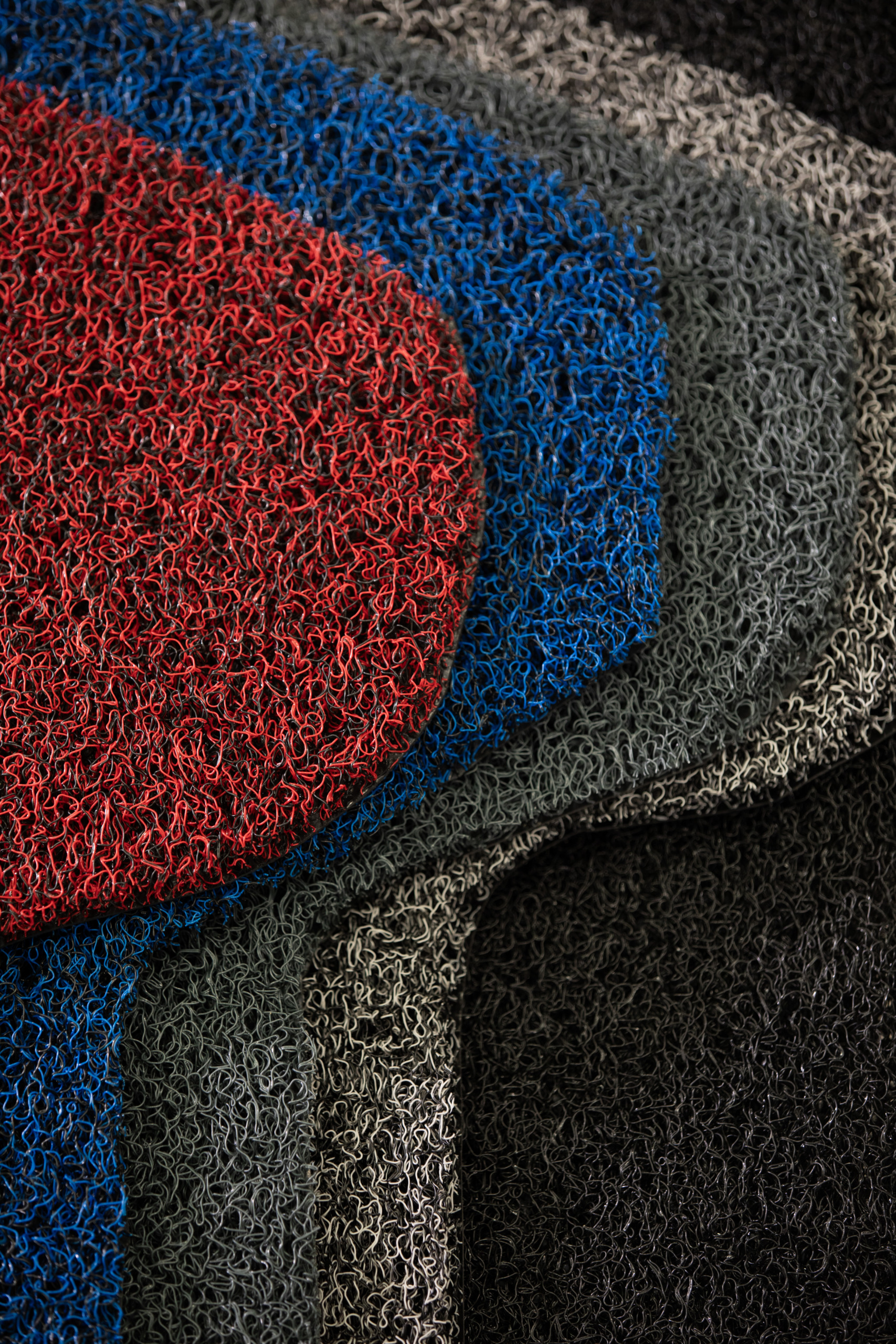

Coil rubber car mats are made from two bonded layers: a dense surface of upright rubber loops sitting over a sealed catch layer. Dirt, water, mud, and grit fall through the coils and stay trapped beneath the surface until you lift the mat out to rinse it. This dual-layer wash-through design handles dust, sand, rain, and heat better than carpet, flat rubber, or moulded tray mats, which makes coil rubber the strongest material option for Australian driving conditions. LUXMAT is a custom-fit coil rubber car mat made for your exact make and model.
What is a coil rubber car mat?
A coil rubber car mat is built from two bonded layers. The top layer is a tightly packed grid of looped rubber strands, sometimes called coils, noodles, or spaghetti depending on who is describing them. The bottom layer is an OEM grade non slip backing that hold your mats perfectly in place. Together, those two layers make up what is commonly called a dual-layer wash-through design.
We also utilise your cars OEM fixings to ensure that the mat is 100% secure and won’t move underfoot.
The combination is what gives the mat its protective properties. The looped top traps anything you walk in. The sealed bottom stops any of it from reaching your car’s original carpet.
How the dual-layer wash-through design works
The top layer of a coil rubber mat is not flat. It is a dense forest of upright loops, packed tightly enough to feel solid underfoot but open enough that anything smaller than a coil falls through. Dirt, grit, sand, water, mud, even small stones drop between the coils on contact and settle on the sealed lower layer.
That is the wash-through part. Everything that lands on the mat gets out of sight and stays there. Your shoes are not standing on the dirt, your carpet never sees the dirt, and the cabin keeps looking clean even when the conditions outside are not.
When the mat is ready to clean, you lift it out, tip the debris into a bin, and either shake it off or rinse it down with a hose. The water runs straight through the coils and off the sealed base. Within minutes the mat is drained, dry on top, and ready to put back in.
A flat rubber mat, by comparison, holds dirt on its surface. Every time you step on it, the grit is pressed back against your shoe and tracked further into the car. Every time it rains, water pools on top and either spills out when you open the door or seeps into the carpet at the edges.
Why coil rubber suits Australian conditions
Australia is a hard country for car mats. Dirt is everywhere, the sun is unforgiving, and the weather swings from drought dust to sudden downpours in a single afternoon. Coil rubber is engineered for exactly this kind of mixed punishment.
Dust and sand. The fine dust that gets into every Australian car cabin sits on top of carpet and flat mats. On a coil rubber mat, it falls between the loops and stays below the walking surface until the next clean.
Mud and grit. Tradie boots, weekends in the bush, kids coming back from a wet sports field. Mud lands on the surface and locks in below the coils instead of smearing across the cabin floor.
Rain and spills. Water passes straight through the coil layer rather than pooling on top. The driver’s foot does not slip, and the custom-fit edges contain any spill within the mat’s footprint instead of letting it run onto the carpet.
Heat and UV. Quality coil rubber holds its shape in summer sun far better than soft moulded rubber, which can warp and curl when cabin temperatures climb past 70 degrees. It also resists the fading and stiffening that affects cheaper mat materials over time.
The hose-clean cycle. Most Australian households already wash the car at home or at a coin-op bay. A coil rubber mat slots into that rhythm: lift, tip, hose, dry, replace.
Coil rubber versus other car mat materials
Most drivers end up choosing between four mat options. Here is how they compare on the things that actually matter day-to-day.
Carpet mats. Soft, OEM look, poor at handling dirt. Anything that lands on them sits on the surface or works into the pile. They are nearly impossible to clean fully, and they wear out fast under daily use.
Flat all-weather rubber or TPE. Better than carpet in wet conditions. Dirt sits on top, water pools on top, and you need to physically wipe or vacuum to clean. Can warp in heat, and often smells in summer.
Moulded TPE tray mats. Deep edges contain spills, which is genuinely useful. But the surface is still flat, the dirt is still visible, and the mats are bulky to handle and store. Heat performance varies a lot by brand.
Coil rubber mats. Top performer for hiding dirt, handling water, and cleaning quickly. Custom-fit versions like LUXMAT cover the full footwell shape rather than approximating it, and lock into the vehicle’s OEM mat fixings so they do not slide.
For Australian conditions specifically, coil rubber wins on three things that matter most: dust handling, water handling, and ease of cleaning.
Caring for a coil rubber car mat
The cleaning routine is part of what makes the material work.
Once a fortnight, or after any particularly muddy or sandy trip, lift the mats out of the car. Tip the debris into a bin. Shake or vacuum the coil layer. If the mat needs a deeper clean, hose it down on a hard surface or in the garage, give it a couple of minutes to drain, and let it air dry before refitting.
You do not need detergent, you do not need a brush, and you do not need to baby the material. Coil rubber is built to handle exactly this cycle.
Who coil rubber car mats work best for
Three groups of Australian drivers get the most out of coil rubber.
Daily commuters who want their cabin to keep looking new after years of dust and weather.
Tradies, farmers, and work vehicle owners who deal with mud, gravel, oil, paint, and concrete on a daily basis.
Families and weekend adventurers carting kids, pets, sports gear, beach sand, and camping mud back into the car after every outing.
Frequently asked questions
Are coil rubber car mats better than rubber mats?
For most Australian conditions, yes. Flat rubber mats hold dirt on the surface and trap water on top. Coil rubber mats hide the dirt below the walking surface and let water pass through the coils, which means less effort to clean and a cleaner-looking cabin between cleans.
Can coil rubber mats damage my car’s original carpet?
No. The OEM-grade non-slip backing sits between the coil surface and your car’s carpet, and the custom-fit edges keep debris contained within the mat’s footprint. A correctly fitted coil rubber mat protects the original carpet better than any other style of mat.
Do coil rubber mats smell in summer?
Quality coil rubber is far less prone to summer odour than soft moulded TPE or cheap rubber mats, because trapped debris is cleared regularly during the wash-through cycle and the open coil surface dries out quickly after rinsing.
How long do coil rubber car mats last?
Many years, when looked after. LUXMAT mats are backed by a 24 month warranty, extendable to 36 months with a heel pad fitted.
Are LUXMAT mats custom fit?
Yes. Every LUXMAT is made to the exact footwell dimensions of your specific make and model, so the mat sits correctly, covers the full floor area, locks into the OEM fixings, and does not interfere with pedal travel.
What is the best car mat for an Australian climate?
A custom-fit coil rubber mat is the strongest all-round choice for Australian conditions because it handles dust, sand, water, and heat in a single design, and cleans up with nothing more than a hose.
The bottom line
Coil rubber is the right material for Australian driving conditions because it handles every kind of mess a driver brings in, hides it where you do not have to look at it, and cleans up with a hose. LUXMAT is a custom-fit version of that material, engineered for your specific vehicle so the protection covers your entire footwell, not just the middle of it.
Find your vehicle and shop LUXMAT: ultimateautoco.com.au